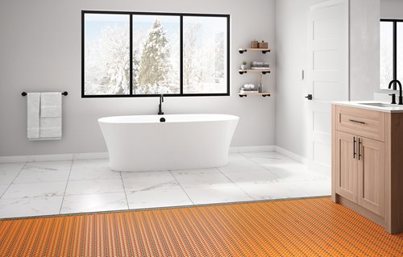
Peel-and-stick uncoupling membranes are becoming more popular as a clean and efficient solution for tile installations, especially when used with heated floor systems. These innovative membranes eliminate the need for thin-set mortar during installation, offering a mess-free and stress-free alternative to traditional uncoupling membranes.
Designed for use over plywood, OSB, gypsum, and concrete substances, peel-and-stick membranes simplify installation while delivering the same core performance benefits professionals expect.
What Are Peel-and-Stick Uncoupling Membranes?
Peel-and-stick uncoupling membranes feature a pressure-sensitive adhesive (PSA) backing, similar to what’s used in carpet tiles. This adhesive allows installers to reposition the membrane during installation and strengthens as pressure is applied over time.
The result is a secure bond that improves with rolling, foot traffic, and continued use, without the hassle of mixing or applying mortar.
Core Functions and Performance Benefits
Peel-and-stick uncoupling membranes provide the same essential functions as traditional versions, including:
-
Uncoupling: reduces stress transfer from the substrate to the tile
-
Waterproofing: Protects the substrate from moisture penetration
-
Vapor management: Allows excess moisture and vapor to escape
-
Load Distribution: Supports tile installations under normal traffic
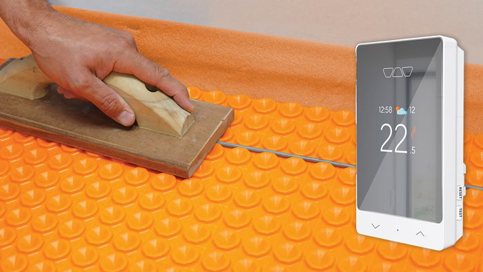
Many peel-and-stick membranes are also designed to accommodate floor-heating cables, making them ideal for adding floor-warming capabilities. Heated floors can enhance comfort and help reduce heating costs during colder months.
Typically made from polypropylene, these membranes waterproof the substrate from above while allowing vapor to move freely below the tile surface, preventing moisture-related failures.
Sound Reduction for Multi-Family Spaces
Sound control is a major consideration in condos, apartments, and multi-family residences. Some peel-and-stick uncoupling membranes include a thicker fleece or cushioning layer designed to reduce sound transmission.
This added layer improves impact sound insulation, helping limit noise such as footsteps and dropped objects between floors, an important benefit in a shared living environment.
Easy, Efficient Installation
Ease of installation is one of the biggest advantages of peel-and-stick uncoupling membranes. The process is straightforward
-
Peel off the release film from the adhesive side
-
Place the membrane onto the substrate
-
Reposition as needed until properly aligned
-
Roll the membrane into place to activate the adhesive
The pressure-sensitive adhesive continues to strengthen over time, and normal foot traffic further enhances the bond after installation.
Substrate Preparation Requirement
Proper substrate preparation is essential for optimal performance. The surface must be:
In some cases, an appropriate primer may be recommended, especially for difficult-to-bond substrates or when additional adhesion is required. Always consult the manufacturer’s technical documentation for approved substrates and installation guidelines.
Use in Wet Areas
While peel-and-stick uncoupling membranes are not intended for exterior applications, they can be used in wet areas such as shower floors when paired with a compatible primary waterproofing system.
When installed correctly, they can provide uncoupling, sound control, and floor warming functionality in moisture-prone environments.
Is a Peel and Stick Uncoupling Membrane Right for Your Project?
Peel-and-stick uncoupling membranes offer a modern, installer-friendly solution for tile and heated floor applications. With benefits like faster installation, reduced mess, sound control, and compatibility with floor heating systems, they’re an attractive option for many residential and commercial projects.
To determine if they’re the right fit for your installation, review the manufacturer’s technical data and installation guidelines or consult with a qualified flooring professional.